Map-based publishing
Members could search an address and browse or contribute neighborhood posts.
Case study / Location-based social web
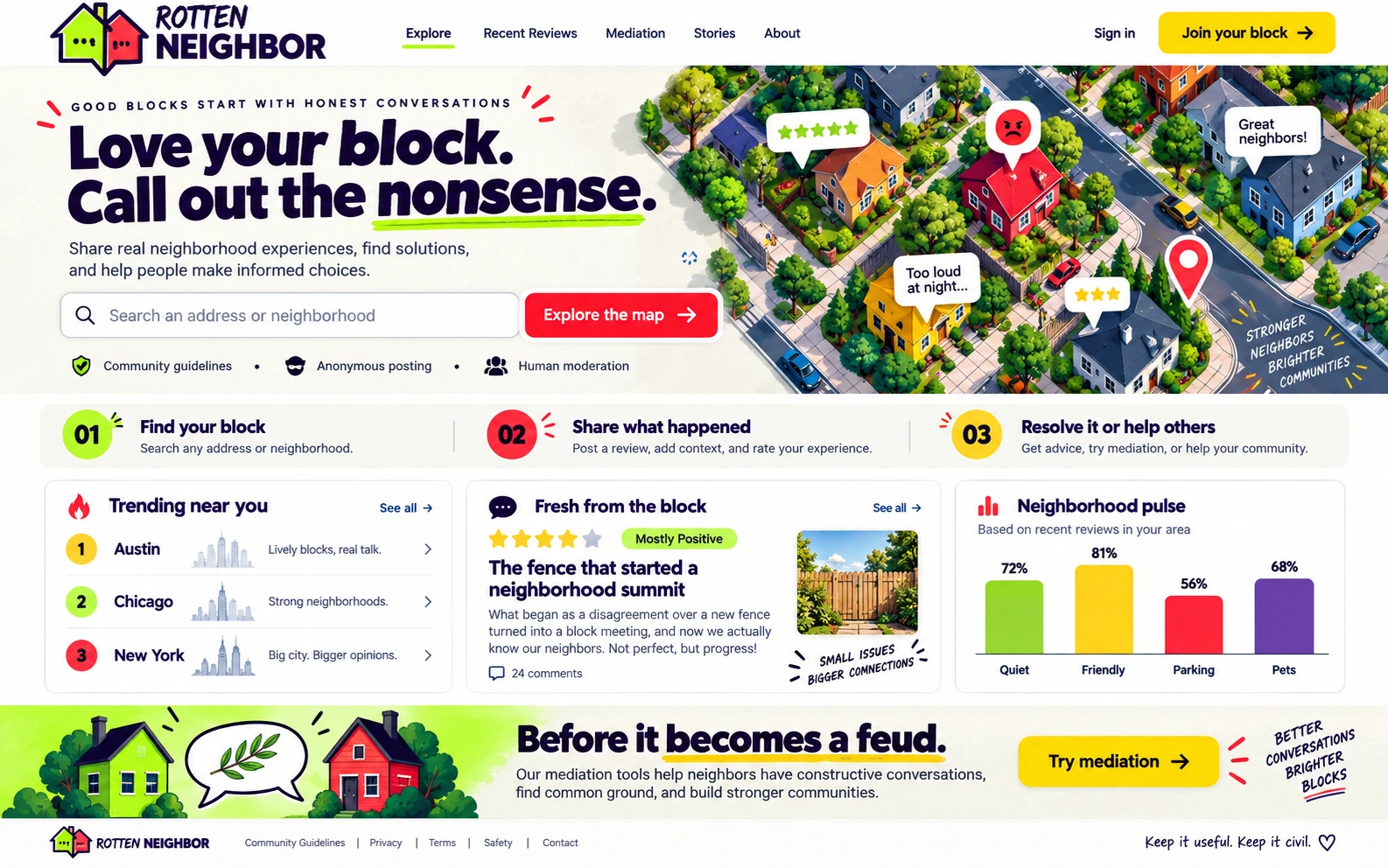
A location-aware community platform combined addresses, user posts, ratings, notifications, and local data in an unusually interactive experience.
01 / The problem
Most neighborhood information online was fragmented. The idea behind Rotten Neighbor was to make location the organizing principle for stories, ratings, and activity on a single social map.
02 / The solution
Pixeldust Interactive built an address-search and map experience on Google Maps API with posts, comments, voting, neighborhood ratings, notifications, media contests, and integrations for additional local information.
Members could search an address and browse or contribute neighborhood posts.
Ratings, comments, contests, and social sharing supported participation.
Email alerts and outside data sources delivered neighborhood updates and resources.
03 / Business value
The work addressed a real challenge for Rotten Neighbor—improving the experience for customers, teams, or both.
The archived project writeup reported more than 100,000 daily hits at its peak.
Alerts and comments encouraged users to revisit neighborhood conversations.
The location-first format created a memorable alternative to conventional discussion boards.
04 / Technology
Technologies and deliverables from the historical project are shown as originally documented, including earlier-generation platforms where applicable.
The takeaway
A strong product idea often comes from organizing familiar information in a new way.
Explore all case studiesMake your website work harder
Tell us what needs to work better. We'll help map a practical path forward.