Keyword researchFind the phrases customers use.
We research related searches, estimated monthly US search volume, difficulty, and the likely purpose of a search. We select terms that fit your services and buying customers.
Why it matters: your pages should answer real customer needs. Search-volume figures are estimates; local ranking checks provide the separate location-specific view.
Google positionsCheck the right searches in the right place.
We track saved phrases for a chosen location and mobile or desktop device, looking beyond the first ten positions and requesting up to 100 results. The report records the position and page returned when your site is found.
Why it matters: we can see which services need stronger visibility and whether Google is showing the most useful page. These checks cover unpaid search results, not a Google Maps ranking report.
AI answersSee how AI answers customer questions.
We save questions a buyer might ask—such as “Who builds websites for small businesses in College Station?”—and check answers from ChatGPT and Gemini. We keep answer text and available citations for review.
Why it matters: a business mention and a link to your site are different opportunities. City names can be part of the question; the AI service’s location setting is country-level.
BacklinksReview links from other websites.
A backlink is a link from another website to yours. We review overall link data, strong linking pages, new and lost links, broken destinations, and links that deserve closer inspection.
Why it matters: relevant links can help people discover your site. A valuable link pointing to a broken page can also identify a practical repair. Suspicious-link flags are review candidates, not instructions to disavow automatically.
AuthorityPut link strength and topic coverage in context.
We review provider domain and page link-strength scores alongside selected topic results. Our combined Pixeldust Authority score brings available measures together with a visible calculation and coverage notes.
Why it matters: this helps us compare measured strengths and gaps over time. It is our comparison score, not a Google metric, a Moz Domain Authority score, or a promise of rankings.
SEO site auditFind website issues we can act on.
We check a limited set of public pages for problems such as missing or repeated titles, heading issues, indexing instructions, canonical conflicts, missing image descriptions, and checked broken internal links. Findings explain the issue, why it matters, and a recommended fix.
Why it matters: technical problems can undermine useful content. The audit shows its checked scope; it does not assess every page, render all JavaScript, or replace a full performance and accessibility review.
History and reportingCompare evidence over time.
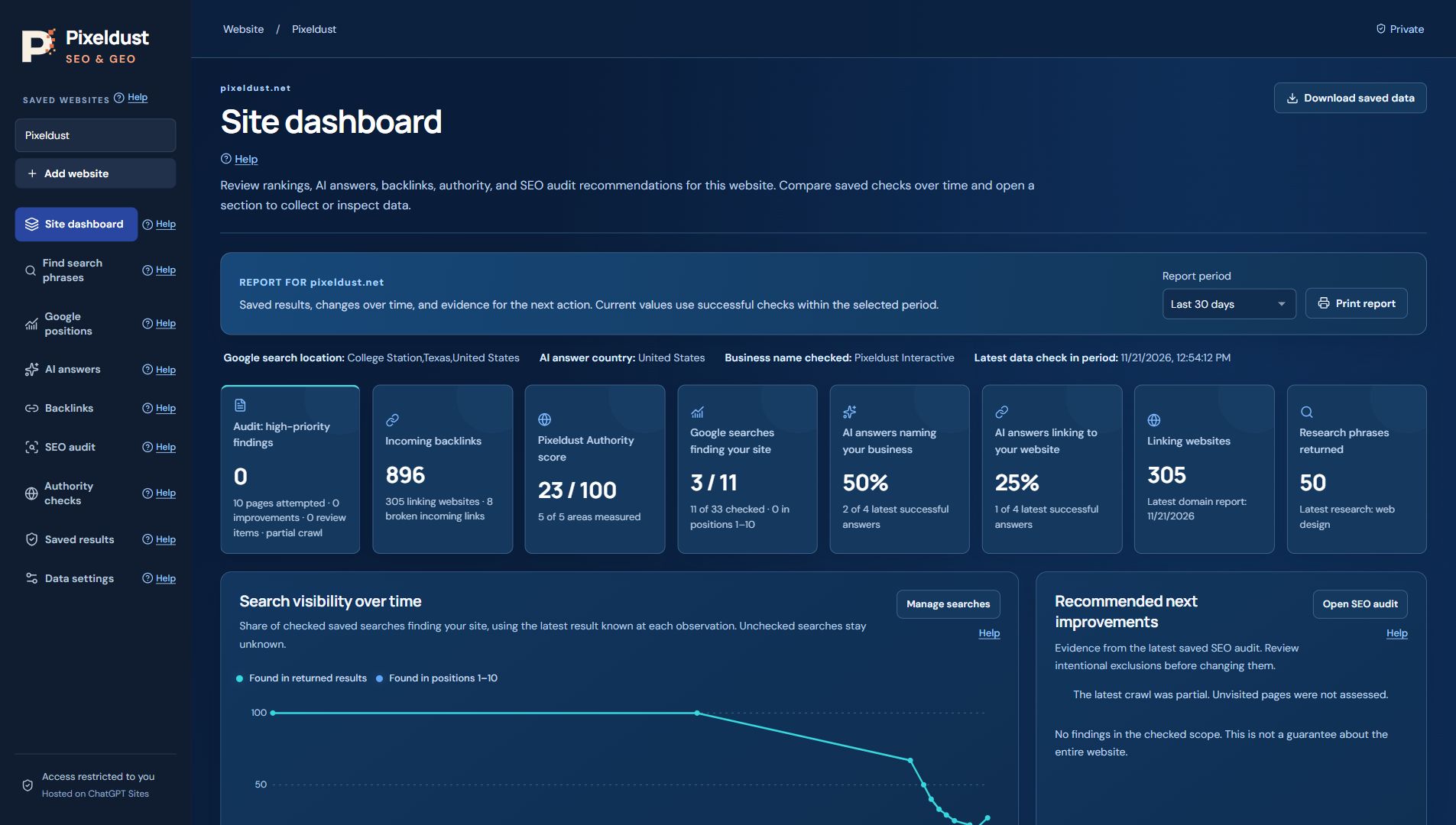
Saved checks build a history for each site. Charts, detailed results, printable reports, and saved-data exports let us review changes and explain the next action. We compare the same phrases, locations, devices, and questions where possible.
Why it matters: a report should show what was checked, what changed, and what we recommend—not just present a score. Failed or unchecked requests stay distinct from confirmed findings, and gaps in collection are not filled with invented daily results.