Structured idea evaluation
Prompts emphasize evidence, fit, and reasons an idea may fail.
Case study / Startup and product planning
A guided research and scoping experience helps software founders challenge an idea before investing in the build.
01 / The problem
Software ideas are easy to generate and expensive to pursue. Early-stage founders need a way to question demand, compare alternatives, and define a small first release with enough detail to hand off.
02 / The solution
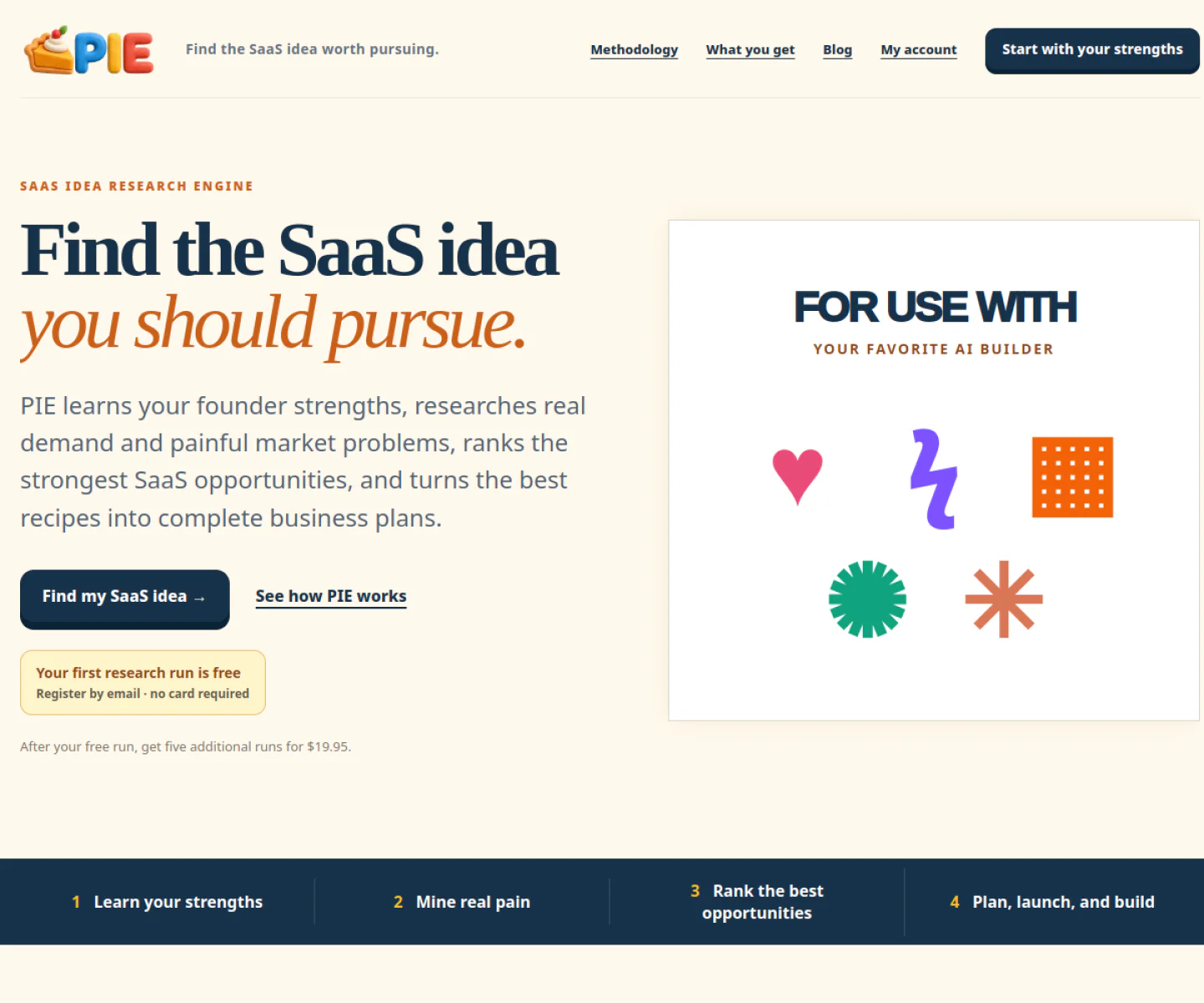
Pixeldust Interactive created PIE as an interactive workflow that connects idea exploration, market and competition questions, scope decisions, and exportable implementation blueprints.
Prompts emphasize evidence, fit, and reasons an idea may fail.
Features are narrowed to a useful first vertical slice.
A written blueprint organizes functional expectations for an implementation team or development assistant.
03 / Business value
The work addressed a real challenge for PIE — Product Idea Engine—improving the experience for customers, teams, or both.
Founders can see major assumptions before spending development time.
A limited first release creates clearer delivery boundaries.
A structured brief reduces repeated discovery work at handoff.
04 / Technology
Technologies and deliverables from the historical project are shown as originally documented, including earlier-generation platforms where applicable.
The takeaway
Product planning adds the most value when it prevents weak bets and clarifies the smallest useful next experiment.
Explore all case studiesMake your website work harder
Tell us what needs to work better. We'll help map a practical path forward.