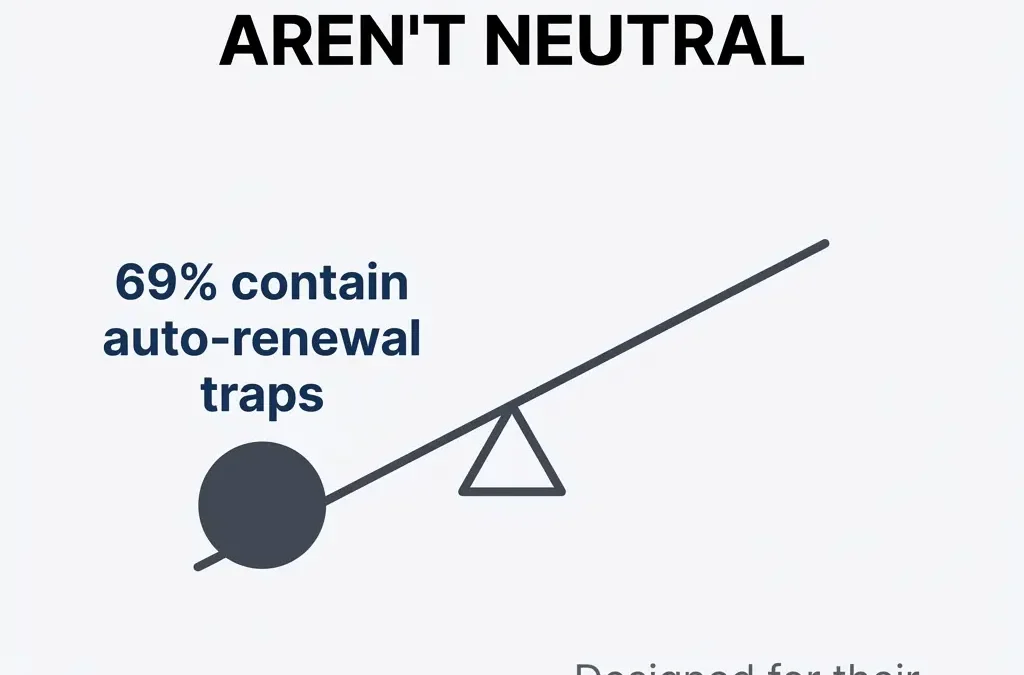
You signed the contract. You shook hands. You believed you had a partnership. Then the first renewal notice arrives. The price jumped 15%. The support you thought was included? That’s an add-on now. The features you expected? Those require a different tier. Your...
Most agencies think risk starts after the contract is signed. That’s wrong. Risk is baked in before you respond to the RFP—inside your proposal language, assumptions, scope boundaries, and delivery promises. And once the client signs? Those risks become your problem....
Contract assumptions are where software projects quietly accumulate risk. They rarely appear as bold warnings. Instead, they are buried in short sections, footnotes, or implied language that shifts responsibility without drawing attention. A weak assumptions list does...
A Project Charter becomes exponentially more important—and more dangerous—when multiple vendors are involved. In a single-vendor project, ambiguity causes friction. In a multi-vendor project, ambiguity causes paralysis, finger-pointing, and deadlock. The charter must...
A Project Management Plan (PMP) is not a compliance artifact. When it fails, it fails because it is written to satisfy a template instead of to control reality. A plan that works does one thing well: it makes execution predictable under pressure. The first requirement...
A strong Software Development Statement of Work (SOW) is not a sales document and not a formality. It is a risk-management instrument. Its purpose is to make success repeatable and failure expensive for the right reasons. When a project goes sideways, a good SOW...